October 28, 2010

First Impressions: “The Social Network”

image

A movie can be like an acquaintance, you first impressions might be right, they might be wrong. But most importantly they change over time. In these post I publish my unfiltered first impressions of an in cinema movie.

Biopics are a very tricky genre. I once joked that the only succesful biopic that was ever pulled off was “Superman: The Movie”, simply because anyone who argued about inaccuracies between the movie and the accepted facts, were exposing themselves as nitpicking comic book geeks.

Though of course the point still remains that many of the facts that differed the movie from the established facts (mythology perhaps being a more accurate term – but lets look at it through the prism of the biopic, not the comic book movie.) were later adapted as established facts in the comic books. The biopic usurped the “truth” in a way.

Of course writing an accurate biography of the character of Superman is not really comparable to writing an accurate biography of a man like Mark Zuckerberg, mostly because of the ever-shifting nature of comic book canon. But what is a biopic about Mark Zuckerberg really supposed to teach us?

Zuckerberg himself said that he wished noone would make a movie about him as long as he was still alive, and I think this is a very fitting comment, espescially in the case of this movie.

This is a movie about a phenomenon as much as it is about a character. And that phenomenon, Facebook, is potentially in its infancy, as many characters in the film point out. There is the speed of new media and services against old media (like, oh, cinema) to consider of course, but the movie only occasionally attempts to say anything about how Facebook has changed the world.

Instead it dramatizes the innvator myth surrounding Mark Zuckerberg, and it does it damn effectively. As many have pointed out the synopsis of the film sounds as exciting as oat meal and milk, but Aaron Sorkin and David Fincher turn it into a movie that stylistically and formally works like a dream.

But in the process it falls into at least two major pits. Firstlyl it bookends the story with two scenes that heavily suggest that Zuckerbergs creativity is spawned by his desire to get back at, and ultimately reconcile with, his ex-girlfriend. It comes of too neatly wrapped, considering that this is a real person we are dealing with.

The second pit is the slightly heavy-handed irony of the programmer behind the worlds foremost social netowrk loses his “only friend” in the legal battle. This too is one of those places where dramatic conventions take priority over facts, I would imagine.

Oh, and Zuckerberg himself comes off as a slightly more bearable, though less hilarious, version of Sheldon Cooper of “The Big Bang Theory”. But I guess some conventions must be observed when writing nerds on screen.

Biopics are indeed very tricky, and not very easy to review either, especially when they circle around a living contemporary. And especially when it is about a phenomenon at it’s height.

Maybe a documentary is, on occasion, preferable.   

August 14, 2010

Twitter – The Movie

Would you like to see a movie about Twitter?

If so, I think you’re the only one of about 12 and a half people on the surface of this planet. But the idea is ripe for parody.

This post is a quick follow-up of my previous blog about David Finchers Facebook movie (“The Social Network”) and it's parodies. It seems another one has surfaced on the web, or maybe it was there all along and I just missed it for my previous post. Who knows. Anyway here is the trailer:

And just for clarification – no there is no actual movie about the making of Twitter in the works, as far as I’ve been able to tell.

August 5, 2010

“Inception” – the Further Adventures of Scrooge McDuck?

image

As of this writing Christopher Nolan’s “Inception” has grossed over 370 million dollars at the US Box Office, and is being adored by the public and hailed by the critics, with a rating of 87% percent fresh rating on Rotten Tomatoes.

Of course whenever a succes soars high, accusations of plagiarism appear, as an alternative to the more traditional (and/ or legitimate) criticisms of a work.

In this particular instance, an uncanny number og similarities have been found between a story from a 2002 issue of “The Life and Times of Scrooge McDuck” and the plot of “Inception”.

image

A lot of elements a similar. The device used for dream invasion, the idea of information extraction itself (in the comic it’s the combination for McDuck’s Money Bin, to absolutely noones surprise), the idea that a fall kicks you out of a dream, noises in the waking world being implemented into the dream and finally the shifting landscapes where a dreamer has no real consistency.

Yes, all these things appear as important points in Inception. But what I think people are forgetting here, or are perhaps unaware of in the first place, is that these ideas are paramount to dream psychology in the first place. How many times have you implemented the sound of your alarm clock, or some other noise into the dream because you just didn’t want to wake up? Have you never woken up just after dreaming that you fell?

Does this mean that I think the similarities are coincidental? I really can’t tell, but I think they are. I do however, think that it is worth mentioning that at least one iconic film scene was taken from a Scrooge McDuck comic. The scene in question is from “Raiders of the Lost Ark”, in particular the one where Indiana Jones flees from a rolling boulder.

All this however, does nothing to ease the fact that Nolan was previously accused of ripping of the French New Wave Classic “Last year at Marienbad”. I find myself unable to comment on these similarities however, seeing as how I’ve not seen the latter movie. Perhaps a blank that needs to be filled in later?

Source: The Geeks of Doom

And if you wish to view the comic with your own eyes: It can be done right here.

August 4, 2010

Facebook, MySpace, Youtube – The Movie

Only one of the above is going to theaters … for now.

In case you haven’t heard David Fincher (Who made thousands of people think it was cool to be a neo-luddite with “Fight Club”) has just directed a movie about the creation of Facebook, aptly titled “The Social Network”. What’s wrong with “FaceMovie”?

Most of you probably have a Facebook profile, but few are probably aware that it started out humbly, as many Internet Billion Dollar Babies do, with the young Harvard student Mark Zuckerberg, and that the network was initially a literal Harvard Facebook. A student who’s-who really.

I’ll admit that the idea of a biopic based on this subjects isn’t excatly thrilling me, but I am actually very interested to see what Fincher will bring to the table.

The first trailer for “The Social Network” is right here:

But of course, as we all know in these internet days no deed goes unspoofed. So it’s wasn’t long before a parody of the trailer, alledgedly advertising a movie about MySpace (remember MySpace? Chances are you were on there more than once).

Here is the trailer for “The Other Social Network”

And finally, here is the parody trailer about the only other website that eats up more teenage and adolescent waking hours than any other.

The trailer for “The Video Website” (where strangely I couldn’t find any of the other trailers)

The Social Network will open the New York Film Festival on September 24 and then appear in US theaters on October 1.

The Never-Ending Story: “Dexter” – Dark Passengers All Around

image

Dexter Morgan is a geeky lab worker for the Miami Metro Police Department, he is the lover of Rita, and a surrogate father to her kids Astor and Cody, other than that he is the chewtoy of his foster sister Debrah, and is the guy that brings the entire precints donuts.

And he is a serial killer, who has killed at least twenty people by the start of season one.

But don’t worry, they were all killers themselves. All is well and good in the jungle. The women and children and cuban immigrants have a dark protector watching over them.

At it’s heart Dexter is a show about what it means to be human, as opposed to being a monster. Dexter uses his narration very frequently to remind us that he has no real emotions only emptiness. But it takes no shrink to see that Dexter is obviously mistaken, almost self-deceptive.

Dexters constant musing inner monologue serve two purposes. First of all they allow us a glimpse of the mind of this killer, and allows the audience to sympathize with him. Though the fact that he is played by Michael C. Hall (pulling of cute and creepy with equal amounts of ease) doesn’t excatly hurt either.

image

And then I propose this to you:

The second purpose of the narrative is in fact a far more sinister one, which only comes to mind if one allows oneself a great enough distance to the narrative device. Dexter narrates as if to a specific person, and it is clearly obvious that this person can not be any other character within the diegesis of the show itself.

We are the Dark Passenger that Dexter speaks of. We are the ones that compel him to perform these task, that are in any categorical sense of justice just plain wrong.

I find that thinking about “Dexter” in this way opens many new and interesting interpretations. Try it. 

Dexters returns for his fifht season on America’s Showtime on September 26th 2010.

July 29, 2010

First Impressions: “Inception”

image

Hi there. “First Impressions” is where I give my first Impressions of a movie that is likely fresh in the cinemas.

Like meeting a person, sometimes you get a lot of things right by the first impressions, sometimes you find out subsequently that you were wrong. But more often you just learn that the things you judged by didn’t really matter in the long run.

The first trailers of Inception reminded me in no small part of “The Matrix”. And why not, “Matrix” was a defining movie for my generation, some of the aesthetics sure seemed similar enough, and even the first details of the plot of “Inception” seemed to call that film to mind.

But after having seen the movie I find that comparing the two yields no really interesting conclusions aside from that if “The Matrix” was comic book action approach to a layered world, “Inception” is its heist movie cousin with the urban action tendencies.

It deals, like Nolan’s previous favorite “Memento” and indeed DiCaprio’s previous endeavour “Shutter Island” with a conflict born of coping with the loss of a woman, and like Nolan’s “Batman Begins” it is also about stepping out of your father’s shadow, one way or another.

While these are things that are pregnant with potential of freudian spiders and woods, everything is treated with a slightly twisted action movie mindset. After all, a dream doesn’t need to contain any monsters, spiders or even basements to be frightening. They are, in and of themselves, terrifying constructs.

The surreal backdrop never becomes Terry Gilliamesque or technologically indulging like something out of Phillip K. Dick. Plot and theme are front and center here, all the exploitation of the dreamscape for it’s own sake pretty much peaks in the second act, after that it’s tightly scripted.

Characters are second fiddle, but they are quite enjoyable nonetheless, and there a few of Nolans humorous quips in their mouths, though this is a very serious affair. You’ll probably find yourself laughing fewer times than during “The Dark Knight”.

But though few moments are lost on laughter, not one is wasted. We move in and out of dreams, through car chases that bring to mind “Heat” and its like, mid-air brawls that reminds one of Hitchcock, and a final action set piece that seems taken straight out of cold war James Bond, yet fits like a glove. Nothing is a sore thumb. Yet then again nothing is weird about the dream while we’re dreaming. Like they say in the film, it’s only when we wake up that we notice something is wrong. 

A little bit like picking apart a movie.

For those of you that have already seen the movie. Screen Rant has some quite in-depth analysis of it which can be found here.

April 8, 2010

Criticism on TV? – Goodbye!

America’s Longest running Movie show (called among other things “At The Movies”, but perhaps better known as “Siskel and Ebert” or “Ebert and Roeper”) was recently cancelled.

Internet outrage was quite wide, but here, for the first time, one of it’s last hosts, A.O. Scott of the New York Times writes it’s eulogy and comments on the current situation of professional criticism.

It should perhaps be said that while I think the show’s hosts (at least the late Gene Siskel and Roger Ebert themselves) were gifted and knowing, but that the program was, in the end, a consumer guide, I never really felt it rise up to the level of criticism that these two minds might have been able to provide.

But then again, if it had, it probably would have been canceled much sooner.

One thing that it did right, which I think our own Danish TV-reviws (which is, in effect “DR2 Premiere”) lacks is the prescense of two charismatic individuals of equal knowledge and opposing views.

Ironically, this space is filled in by Political Analysis these days, in the shape of TV2 News’ “Mogensen and Kristiansen”. Who would have thought the day would come when politics drew more attention that movies? 

You can read A. O. Scotts own words on the show and the state of criticism right here: The New York Times

March 18, 2010

Re-Viewing: “Back To The Future” (1985)

“Last night, Darth Vader came down from planet Vulcan and told me that if I didn't take Lorraine out that he'd melt my brain.”

- George McFly (Crispin Glover)

image Hi there. When I Re-View movies I do just that, I watch them again. Catching things I missed the first time, and wondering why i did or didn’t like that movie as much as I did.

Directed by Robert Zemeckis, writtten by Zemeckis and Bob Dale. This movie is famous for making Americans pronounce “gigawatt” as “jigowatt” and for avoiding a silly idea later used in “Indiana Jones and the Kingdom of the Crystal Skull”.

I was tempted to write an in-detail analysis of the temporal physics of this movie, including a clever observation on how the Time Machine itself is just about the only thing in the movie that isn’t an ontological paradox.

But really, I couldn’t reach anywhere near the level of obsession and meticulous planning found so many other places.

In stead I’m going to focus on what really got me on the re-viewing – that there were still surprises in the movie. Little ones. But still that’s what matters.

Because even after watching the movie for the nth time I’m surprised at when Marty almost speeds up to 88 on the parking lot and when the Doc’s electric wires don’t quite meet atop the clock-tower.

These may be little things sure. But that the movie can manipulate into being surprised by them once again is, I believe, a testament to it’s greatness.

Bonus Info: Having watched “Metropolis” now, I recognize Doc Brown as being modelled after the mad scientist Rotwang from that movie. But to my embarrasment, this didn’t become clear to me until the climactic clock tower scene, where Zemeckis almost goes out of his way to pay homage to “Metropolis”.

March 7, 2010

“Alice in Wonderland” – Watch It Right Here

And that headline is not even a joke.

This is the first known adaptation of Lewis Carrols novel. A lone, badly damaged copy kept by the British Film Institue has now been made availabe online. No doubt timed with the release of Tim Burton’s adaptation of Carrol’s story.

Brought to you via the wonders of YouTube:

Re-Viewing: “The Departed” (2006) – Sense and Simplicity

“My theory on Feds is that they're like mushrooms, feed 'em shit and keep 'em in the dark”

- Dingham

Hi there. When I Re-View movies I do just that, I watch them again. Catching things I missed the first time, and wondering why i did or didn’t like that movie as much as I did.

image

Directed by Martin Scorsese and Written by William Monahan. Based on “Infernal Affairs” (“Mou gaan dou” written by Alan Mak and Felix Chong)

This movie is famous for being the third coorporation between Leonardo DiCarpio and Scorsese, for showing Matt Damon with a Boston Accent again and for being the movie with the most uses of “Fuck” (237) to ever win the Academy Award for Best Picture.

image

“The Departed” is a movie that is quite popular among both critics and the general audience. Even hardcore Scorsese fans will argue that even though it wasn’t his best, it got him a Best Directing Oscar, which they must have thought was overdue.

And it really is a finely constructed movie, that requires many viewings to fully grasp. With intricacies of double-crosses, triple-crosses and other cross imagery, notice how there are often visible crosses whenever a major death is about to take place. Most notably Queenan (Martin Sheen) and Sullivan (Matt Damon).

But to me all this “construction” is really where the problem lies. It’s not a bad thing that a movie is meticular with it’s structure, not at all. But not really a good thing when your cleverness distracts from the movie.

As such “The Departed” ends up like more of an intellectual affair with its rapid editing, clever parrallels and juxtapositions and economically written characters.

image

But even after a handful viewings of this film I still have trouble following Colin Sulivans character arc. Is he a good kid who is in the wrong company but good at heart? Or is he a basterd who regrets his ways? Is he an Michael Corleone fighting destiny but ending up falling victim to it, or is he just a confused Freudian boy? I’m still not sure, and it bugs me enough to hurt the movie.

But that’s not all, if I lacked a protagonist whos motivations were clear I could just read DiCaprios Costigan as such (even though I would argue that the movie is really Sullivans story – it’s bookended by him.) there is more that just frustrates me. Even after a couple of viewings I’m still not sure who the guy who shoots Costigan at the end is. 

I’m not going to pass some sort of condemning judgement on “The Departed” because of this though, because I actually qutie enjoyed watching it. But that doesn’t change the fact that it is more of an intellectual excersise than an emotional one, the latter being what most gangster movies aim for.

Here’s the trailer for “The Departed”:

And just because you didn’t ask for it, here’s the theme song by Dropkick Murphys:

February 28, 2010

Re-Viewing: “Dogma” (1999)

Hi there. When I Re-View movies I do just that, I watch them again. Catching things I missed the first time, and wondering why i did or didn’t like that movie as much as I did.

image

“Dogma” (1999)

Directed and written by Kevin Smith. This movie is famous for featuring a literal “shit demon”.

Kevin Smith is, by his own admission, not so much a director as a writer who films his own writings. And nowhere is this more obvious than in “Dogma”.

”Dogma” was, and still is, my favorite of Smith’s movies. Even though it is really an epic struggle of evangelical proporiortions, it still feels like Smith on even a macroscopic plot level.

It goes like this: Two outcast angels (Matt Damon pre-“Bourne” and Ben Affleck pre-“Armageddon”. Both Pre-“Good Will Hunting”) Have found a loophole in the catholic dogma which allows them to return to heaven contrary to Gods commands. Only problem is that if God is proven fallible, the entirety of existensce is erased. This all sounds much better when Alan Rickman explains it in the movie.

Thus, the forces of heaven send the last relative of Jesus Christ, played by Linda Fiorentino out to stop them. She is aided by the thirtheenth apostle (Chris Rock) who is here to inform the world that Jesus was black, a muse (Selma Hayek) who is here to act against the misogyny in the bible, plus Jay and Silent Bob (Jason Mewes and Smith himself) who are there because … well, they provide good laughs.

This all has a very high potential for action. But this is a comedy, and it ends up in a lot of talking. A whole lot of talking.

image

I first saw “Dogma” on TV late at night a handful of years ago, when I was in a slightly more impressionable age. And I dropped in about halfway through, around the point-of-no-return. This is were the dialogues are actually the most fitting and grapping. In fact I think that had the dialogue been trimmed down in the rest of the film and preserved around this point, the film might have had a more universal appeal. Well, if look past all the religious uproar it caused.

But my point is that there is a “great movie” in “Dogma”, with lots of dialogue on top, and a lot of “great dialogues” that other movies would kill to have. But this is not really something that bothers me on the personal level, because the dialogue (the whole lot of it) is good and is mostly delivered by people who take scene-chewing delight in it, the most fun to watch is the aforementioned Alan Rickman.

But even today Dogma stands as a movie that is a marriage of a pseudo-intellectual series of arguments against organized religion (catholicism taking the worst of it) and a dirty, but funny comedy. And it doesn’t ever delude itself into being anything else. It works at what it sets out to do – give us a good time, something to think about, and maybe a voice for some things that we didn’t know we wanted to say.

Bonus Points: This movie features Jason Lee as the demon Azrael. The role which got him cast as the villain Syndrome in Pixar’s “The Incredibles”.

Furthermore Kevin Smith’s latest film “Cop Out” (formerly “A Couple of Dicks”) has just premiered in the United States. It stars Bruce Willis who starred as John McClane opposite Alan Rickman’s Hans Gruber in “Die Hard” back in the mythical year of 1989.

February 18, 2010

Re-Viewing: The “Antichrist” of Tarantino – “Inglourious Basterds” (2009)

A very good Danish teacher of mine once told me that in order to analyze any piece of fiction, all you really had to look closer at were a) “what’s it called” and b) “how does it end?”.

The title “Inglourious Basterds” is a slightly mistyped retyping of the previous “Inglorious Bastards” of which Tarantino’s film is neither a remake nor a direct parody. On one hand this suggests a willing invoking of the generic, with the typos in there as nothing but “artistic license”.

Incidentally the danish translation names the Basterds something more akin to “The Sinister Hellhounds” or “Insidious Scumdogs”. I’m not sure why, but I almost like those titles more.

The ending is where the meat is however. Dr. Joseph Goebbels, Martin Bormann, Herman Goering and the Führer himself are excecuted, shot to pieces, blown up and finally incinerated in a small movie theatre in Paris a few weeks after the landing of Allied troops in Normandy in 1944. In case you weren’t aware – this is not the generally accepted historical account.

In the aftermath of all this, Lt. Aldo Raine and the only other surviving member of the Basterds, Utivich, find themselves alone just across Allied lines with Colonel Hans Landa, who seems just about to get away with everything. That is until Raine shoots Landas radio operator, and presents his primary beef to Landa: Landa is a Nazi, and now he wants to run away from it.

Thus Raine and Utivich carve a swastika in Landas forehead. And one comments to the other, in the final shot of the film: “You know what Utivich, I think this may be my masterpiece.”

imageWe’re gonna make a film, Marcel”

One possible interpretation, that I am surprised hasn’t been discussed more, is the fact that the line is Tarantino speaking. That is insofar as Raine acting as an author surrogate more than any other character in a Tarantino movie, I’m not forgetting that both Goebbels and Hitler speak more like Tarantino characters than historical figures.

“Basterds” was a project that was many years in the making. The first drafts of the script apparantly already existed somewhere around the time of “Jackie Brown” if not earlier. Though the plot was radically different back then.

I’m taking a wild educated guess here, but I suspect two events were really what finally got the project rolling: the first was the premiere of “There Will Be Blood” in 2007 (Tarantino evens admits as much – having an unofficial rivalry with Paul Thomas Anderson) and the second was the dissappointing reception of “Death Proof”.

Tarantino had been critizized for a substatial part of his career. The points of contention are usually the points that other people love his movie for: His dialogue and character-driven (non)-plots and his heavy homaging/stealing from other films that he likes.

image “Then we’re not operating on the same level of mutual respect as I had hoped” – “No, I guess not”

When critique like this goes on a thing often happens: The director often becomes indistinguashable from his movies. Your mileage may vary on this, but I don’t think that this is always a fair point to make.

But apparantly Tarantino seems to own his criticism here. Taking all his personal trademarks and siphoning them into a movie that contains some of the more sacrosant points of cinema, and of human history in general: The persecution of Jews (Shoshanna’s backstory), the brutalities of war (The Basterds), living in fear and opression with censorship as a consequence (Shoshanna in Paris), and finally culminating them in a cathartic slaughter of perhaps the most demonized individuals in history.

And that is precisely the point. Where perhaps any other director with Tarantinos academic knowledge of, and deep-felt love for, cinema would have played more on subtlety or obvious symbolism. Tarantino is simply “obvious”.

His references and homages are there, but as always you can either choose to ignore them, appreciate them or make a game of picking them out. They don’t have to be understood to appreciate the movie, the movie is an achievement in itself. As it should be.

image The greatest film director ever…

This is what leads me to compare this movie favorably to Lars von Trier’s “Antichrist”. Where “Antichrist” split the waters. Either you loved it or hated it I allowed myself to use a simple reasoning in order to decide what I thought of it: Was the movie itself any good?

Short answer: No. It was too obsessed with its own subtext to care about making the text coherent. There was probably and excellent symbolism and research behind it, but no movie to hang it on. The movie was admittetly von Trier’s way of getting out of depression. If it helped him, I’m happy for him, but I very doubt that it had that effect on anyone else. In this case the director and the film really became inseperable.

In the same way Tarantino’s “Basterds” is a vanity project. But that really can’t be held against it, because Tarantino knows how to make a vanit project entertaining, and still make his point.

For furthing reading on what effect “Basterds” has had on Tarantino’s career. I can recommend this article from The Guardian’s Film Blog.

February 16, 2010

Jason Segel Has A Hand Up Your … Backside…Kermit

“The Cheapest Muppet Movie Ever Made”

image Back in September of 2009 that was the working title of the latest big screen appearance of the loved and adored puppets. However revently it got changed (in my opinion an improvement) to:

“The Greatest Muppet Movie Of All Time”

The Muppets have had a hard time in recent years. It is hard to capture an audience in a time of CG when you’re made of cloth and stuffing. Though truth to be told Disney (who currently own the Muppets) are media savvy enough to still make a name for the Muppets on the Internet.

However, the first muppet feature film since 2005’s “The Muppet’s Wizard of Oz”, which was a television event, is in production. Some of the minds behind it are the director of TV’s “Flight of the Conchords” James Bobin, and actor/writer Jason Segel, perhaps best known from TV’s “How I Met Your Mother”.

imageJason Segel also starred in the film “Forgetting Sarah Marshall”, which I must admit I haven’t seen myself, but I’m told that there is an excellent puppetry sequence in there somwhere, and that this inspires people with great confidence in the project.

Full details can be found at The Playlist

Personally I am also very excied about this project. The Muppets are, in the right hands, family entertainment of the very best kind. A kind that I only really see Pixar consistently producing these days.

In other words: We need the (censored for you convience) Muppets!

I’ll leave you with two clips. The first from my favorite muppet movie “A Muppet Christmas Carol”:

And this one is one of Internet fame, who says that franchises can’t survive on the Internet?

February 15, 2010

Trailers – They Just Don’t Make Them Like This Anymore

Now, in principle, the title of this post is misleading. My parents had hardly been born when “Psycho” first came out, so I hardly have any right to feel any nostolgia or such towards seeing this in in a theatre.

But this trailer is magnificent. Almost six whopping minutes long (that’s even younger than most YouTube clips) and this was shown before another feature mind you.

And that doesn’t even begin to touch upon the structure and means that it employs. Just watch this and watch three random trailers on Apple Trailers and I bet you not feel like those three were cut from the same mold. Not that there’s necessarily anything wrong with that – I’m just trying to show that doing it other ways can work quite well.

And here is one:

February 13, 2010

“Metropolis” – live-streamed and (almost) restored.

image Last night at the Berlin film festival, it happened. An almost-complete version of Fritz Lang’s magnum opus “Metropolis” hit the silver screen, with a live orchestra, a live audience and a live online streaming.

That last part is perhaps the greatest gesture of all here. Because it shows film as something that derserves a canonical recognition, af if a film like “Metropolis” doesn’t, then I don’t know which film does.

I was unfortunately unable to follow the live-stream my self, as were certain countries, like the US I’m told, but fortunately journalists who were actually there give some reports:

The Independent – Greatest complain was the that the lighting of the orchestra diluted the film itself.

The Local – Talks to a few members of the audience.

And that’s pretty much it, it seems. The Indepent’s article seems to be the the one kicked around the most.

The restoration will probably only be given full attention once it reaches home video. The live stream was, after all, competing against the opening of the Winter Olympics.

Either that, or this really is a far more esoteric subject than the arrangers of the Berlin Film Festival had hoped for.

My own first impressions review of  Metropolis (the 30 minutes shorter cut) can be found here: Metropolis

February 12, 2010

The Never-Ending Story: “Fringe”

“Miss Dunham, what we're doing, what you have asked me to do, is pushing the boundaries of all that is real and possible. We're not roasting a turkey.”

- Dr. Walter Bishop

clip_image002[4]

Hi there. “The Never-Ending Story” is my little attempt at commenting on things that aren’t movies: TV, comics and other serialized media are on the line here. Hidden meanings and out-there interpretations will be discussed, and there will be spoilers – but if you’re up to speed, you’re in the safe zone.

I might as well be honest with you. I watched the first few episodes of “Fringe” wanting it to be the new “Lost”. Trying to subcounsciously squeeze it into the same universe as Oceanic Airlines and the DHARMA Initiative, and trying to see if I could see a smoke Monster in any scenes. Needless to say, this didn’t really come to fruition.

But when that realization had hit me, the show actually grew on me. Sure it was heavily episodical in nature, sometimes annoyingly so, but every single episode had at least one aspect you could enjoy even it was just the horrific deaths or John Noble’s brilliant mad scientist Dr. Walter Bishop.

On that note: This is another excellent example of casting a Classic/Shakesperean actor in a slightly over-the-top universe, and adding to the believability. Patrick Stewart and Ian McKellan also seem like the masters of this tendency. In fact Stewart has been praised time and time again for saying ridiculously bad lines with absolute conviction. That said, he elevates even good material.

But I digress, what I really want to talk about here is the brilliant mythology element that Fringe introduces around the last third of it’s first season: The Multiverse.

Now strictly speaking, only two universes really seem to matter in the context of the show, but whenever the parrallel universes are explained, a metaphor that implies that more exists is always invoked. Whether or not this becomes important remains to be seen.

The real brilliance comes because Fringe uses this to create what is perhaps the most horrifying concepts in modern TV, perhaps modern pop culture in general.

clip_image004[4]

Vampires and werewolves are tangible creatures. You can run from them, and you can kill them by whatever means the manual advises you to. Serial killers what cops are trained to catch, and demonic possesions are usually dealt with by a bucket of holy water or a well-timed suicide.

And what all of the above have in common is that fact that they are somewhat localized threats. A small and personal scale if you will.

But in “Fringe” it’s laid out plain as day – that other universe, which has a duplicate of you, only slightly different, is going to come and erase you out of existence. Either that or that doppelganger of you and everyone you know is going to perish.

It can happen anytime, anywhere. You can’t hide anywhere. Well, not anywhere in the greater Boston area at least.

This is an interesting twist on the usual Freudian approach to horror. Instead of the horror coming from a supressed darknes in the Id, we instead have the horror of The Other, albeit in a “not to different” variety.

This is of course a gross oversimplification, but I find that much horror analysis is.

But of course, this scale of threat occurs very often in other media, comic books mainly. But the difference is that we are not dealing with particularly superpowered protagonist. A standard FBI training, a high intellect and a few underworld contacts is really nothing compared to a cosmic-scale threat, and that is were that oh-so-welcome feeling of dread begins.

clip_image006[4]

Oh sure, I am quite aware that the ground is laid for the writing staff to pull a Doctor Who-like “Reverse the polarity!” moment to end the multiversal danger. But if what we get in-between (I know I’m not the only one hoping for full-on multiversal war) is good, I think I can let that slide.

“Fringe” is an inter-dimensional, pseudo-scientific crime drama. And a pretty good one at that. Not all elements are stellar, but the elements that are never disappoint. But the show really feels like it needs a concise sense of direction, or this modern “X-Files” might just fail in a generation with a shorter attention span and a different mentality towards science fiction.

February 11, 2010

Re-Viewing: “Watchmen” (2009)

“What, in life, does not deserve celebrating?”

- Adrian Veidt/Ozymandias

Hi there. When I "Re-View" films, it actually means that I am RE-Viewing them. Thus giving me the opportunity to share my reflections on a film I have by then viewed more than once. Some may seem better, some may seem worse. Instant hit doesn't mean classic, standing the test of time does.

image

“Watchmen” (2009)

Directed by Zach Snyder. This film is famous for making teenagers everywhere snicker at “blue balls” for entirely new reasons.

“Watchmen” was far from the failure it could have been. It enjoyed a quite handsome Box Office succes for something that starred no Hollywood A-listers and was based on a not too famous property. Likewise, the critical reception was actually quite fair for a work that was so uncinematic.

Hold on, did I just say uncinematic? Yes I did. The graphic novel “Watchmen” was praised for being cinematic in it’s visual style. That is, until it’s writer Alan Moore came out and said thinking that was completely missing the point (Moore never being one to hold his tongue when it comes to how his work is treated).

Much of the visual profoundity, details and symbolism that the graphic novel was praised for hiding within each panel comes off as heavy-handed when the movie tries to replicate them. I espescially thinking of a certain “snow angel” in the final act.

Much criticism was raised at the choice of Zack Snyder for the director’s chair. But while his action-heavy style (which must, in part, have been there for market appeal) did deflate some of the feelings of vulnerability and dread in the original work, there is no denying that he loves the source material.

Watchmen was, at this time, a film which would never completely satisfy anyone. The hardcore fans would criticize any change made to the source material, and the generel audience… well what about them really?

image 

What time is it one the Doomsday Clock?

I believe the thing that it really didn’t have going for itself was its timing. Like a 9/11 joke in December of 2001 it was simply “too soon”.

The original graphic novel would never have achieved anywhere the praise it did if it wasn’t for the fact that it had roughly speaking 60 years of comic book history behind it. The specifics of the history didn’t really matter – what matters was that Watchmen could splatter that image like a symmetrical inkblot.

The superhero genre (which is essentially what we are discussing when we say “comic books”) only really made it onto the big screen with “X-Men” in 2000. And only a few franchises really hit it big, though many were launched. That means that “Watchmen” – the movie – has at best a history of 10 years to deconstruct. And no matter how well that deconstruction was, it wasn’t gonna have as much impact as if we had been watching “straight” superhero movies for a least another half decade.

And even then we would have had films like “The Dark Knight” upping the ante, changing the game. Calling for new subject matter to be twisted and subverted.

Perhaps cinema had been better served with a completely different story to deconstruct “superhero movies” like “Watchmen” (the graphic novel) did for superhero comics.

Nonetheless, “Watchmen” is probably the closest thing we’ll ever get to seeing the graphic novel translated faithfully to the screen. This will hopefully satisfy the more reasonable fanbase, and pleasure the slightly-openminded general audience. After all Snyder’s hand gives them a lot of reason to pop this disc into the player as well.

February 6, 2010

Where is Lisbeth Salander? and will she kick Bella Swan’s ass?


The Guardian’s Film Blog recently published an interesting article (which can be found here) Contemplating if we would ever see a succesful movie franchise lead by a female actor.

The conclusion was that the two only female winners would appear to be Kate Beckinsale (“Underworld” franchise) and Cameron Diaz (“Charlie’s Angels” and “Shrek”). Personally I missed any real mention of Uma Thurman and her roaring rampage of revenge in “Kill Bill”. Though to be fair that was just one movie split into two, and technically not a franchise.

But perhaps the most profound point made was that it was in fact the “Twilight” franchise which was really the most succesful.

In spite of teen favourite Robert Pattinson’s looks and their not-insignificant impact in getting the film seen, the portrayal of the female lead Bella Swan (Kristen Stewart) in not without it’s own qualities. As much as she was portrayed for being wooden, and for drawing a negative, submissive, helpless and even straight-out idiotic picture of the american girl teen, this was far from enough to hurt the film’s box office succes. Quite the opposite probably.

Then there is also, the “Sex and the City” franchise which will get a theatrical sequel this year. Needles to say, too many anti-feminist arguments can be made against this franchise

This brings us to Lisbeth Salander, the pierced and abuses heroine of the late Stieg Larsson’s “Girl with the Dragon Tatoo” trilogy. Which is just about endin it’s unusually lenghty theatrical run in Scandinavia, and set for both re-release and remaking in North America.

Now, granted, there a more factors than one can count on three hands that have an effect on whether or not this remake will be a succes (I’m wagering that the re-release will only have a modest one if any – Americans never did like subtitles) but the inherent feminism in the material is certainly not the least of them.

While this has been a staple of the swedish crime novel scene, the violent female protagonist does not seem to be a thriving character in American movies. Either it will be over the top violence (Such as Beckinsale or Thurman – though to be fair, this goes for most male leads as well) or essentially a glorified update of the token girl. The realistic, gritty violence of Larsson’s work and their film adaptation might not be kindly received.

Still, though the chance of Salander beating Bella Swan or Carrie Bradshaw at the box office is staggeringly low. She will still have the victory of being a far more interesting character overall, and a glimmering example of how great a female character can be, with to few peers on the silver screen.   

February 2, 2010

2010 Oscar Nominees

Earlier today the official nominees for the Academy Awards (more commonly referred to as the Oscars) were announced.

I will spare you the full listing in this post, It can be found Here. Instead I wil focus on the nominations that intrigue me the most.

The Devaluation of the Best Picture Nominations – But it’s not all bad.

As you might have known or guessed by now. There can only be one winner in each category. Up until this year there were also only five nominees in each category, making it a great mark of achievement for a movie to be even nominated. (Søren Høy of the European Film College made an excellent blog post on this here (in danish): Scarlett i mit Badekar)

This year however, there are 10 nominees in the category Best Picture. Resulting in the term “Best Picture Nominee” being slightly devaluated. This also seems like a slightly odd year to expand the category, as I have found there to be quite few “really really good” movies this year. And most of those were even genre movies that I recognized as not being “good movies” as such, but I liked them anyway.

My two greatest trips to the movies this year was for “Watchmen” and “Star Trek” respectively. Yet neither of those movies deserve to win “Best Picture” – “Star Trek” didn’t attempt anything other than being a wide-appeal action/adventure-fest, and while “Watchmen” was perhaps closer to “Best Picture” material, it’s timing was simply wrong in the pop cultural counsciousness.

For similar reasons “Avatar” does not deserve to be in this category.  Just as it didn’t deserve to win The Golden Globe for Best Picture. John Campea, formerly of The Movie Blog, pretty much nails it here: John Campea's Cage 

However, the expanded list of nominees has let to one of the best movies actually being nomniated. The movie in question is Pixar’s “Up”. Previously it would have been dumped in the “Best Animated Picture” category. I heartily hope that “Up” wins, but I doubt it with most of my mind.

Tarantino, you Glourious Basterd

Tarantino’s “Inglourious Basterds” is also a favorite this year. Being nominated for both Best Picture and Best Original Screenplay (which has only 5 nominees).

Tarantino’s film winning in either category would mean a victory for what is indeed an auther-fueled work, not that this is necessarily a good thing.

If Tarantino wins this year, my mind will jump to some of the same theories that surfaced when Martin Scorsese’s “The Departed” won in 2007, despite it not being one of Scorscese’s best films (and we can argue elsewhere which one is) – but that the Academy thinks they owed them one for overlooking films such as “Raging Bull”.

However, this is a voting body of around 4000 people at least. That is a pretty hard vote to rig. So if Tarantino wins, chances are people wanted him to.

Besides, Tarantino got a Palme D’Or for his second film (“Pulp Fiction” –1994) so I doubt that a case can be made that he is an unrecognized genius.

Danish Directors Rising

“Burma VJ”, “An Education” and “The New Tenants” are all three films by Danish directors this year. Which of course is a big deal to the Danish press. Normally I’d argue that nationality shouldn’t really play too big a role, but it has been nice to see a tendency to have more Danish actors, and now Danish directors being recognized in the American Market, even if it is only for the purpose of awards.

These were my immediate thoughts on the Nominees. What were your thoughts? Were the right nominees picked? Have any thoughts on who will win what – feel free to comment.

January 28, 2010

Top Ten Downloads of 2009

A quick post concerning the 10 most downloaded films of 2009 (according to TorrentFreak) and their Box Office gross. The list goes by most downloaded, box office placement in parenthesis.

1) Star Trek (No. 7 at the Box Office)
2) Transformers: Revenge of the Fallen (No. 2 at the B.O.)
3) Rocknrolla (Not on the Top 100)
4) The Hangover (No. 6)
5) District 9 (No. 27)
6) Twilight: New Moon (No. 4)
7) Harry Potter and the Half-Blood Prince (no. 3)
8) State of Play (no. 76)
9) X-Men Origins: Wolverine (No. 13)
10) Knowing (No. 38)

The real loser here seems to be Guy Ritchie's Rocknrolla. But this doesn't even begin to factor in things such as width of releas - I personally cen't even remember if the movie was realeased anywhere near me.

Otherwise this would seem to support the image of the typical downloader. "Star Trek", "Wolverine", "Transformers" and to a lesser degree "Knowing" fit in well with the computer-savvy teenager.

The odd man out here is Twilight, which climbs high in gross, despite high downloads. My guess is that this is because it tends to the need of a market (the tween-teenage girl) that is otherwise unattended. That is if one doesn't count Harry Potter, which I'll say is more gender neutral.

Completely absent from the top 10 is Avatar. Of course is was released as one of the last movies of the year, but the studios at least seem convinced that the 3-D technology is their weapon against piracy.

Sources: TorrentFreak, Box Office Mojo

January 27, 2010

Sam Worthington Will Suck Your Blood


Sam Worthington ("Avatar", "Terminator Salvation") has apparantly been cast to play Vlad the Impaler, the Transylvanian warlord who is perhaps better known as Vlad Dracul or Dracula these days. The movie in question is "Dracula: Year Zero", and origin story that will apparantly be based on the historical Vlad, turning him into the iconic vampire in the process.

Word on the internet has been generally negative about this, but I'm actually somewhat hopeful about this. The argument is that Worthington is more of an action lead than the sinister, slender pseudo-european type we usually see as the transylvanian vampire.

If you got the idea that I hate Worthington (perhaps in some of my earlier posts about "Avatar") I have to say that is not the case. He seems like a competent action lead, and though I didn't find him to be stellar in "Avatar", I am actually looking forward to seeing him in this years "Clash of the Titans", a remake of the old Ray Harryhausen-fueled classic.

As for him not fitting people's concept of Dracula, I can only point to another Victorian litterary character that was recently given a radically different treatment: Sherlock Holmes.

Some characters, like Holmes and Dracula, simply have roots and forms so deep and iconic that no re-imagining can overshadow them. If anything this will will be an oppurtunity to give Dracula a new treatment, and an action star might just be the right way to do this.

Plus, if this movie becomes the franchise the titles suggests that the studio is hoping for, we might actually get to see Worthington play a villain - which might just be the oppurtunity he needs to prove whether or not he has really got some acting chops.

What are your thoughts on Sam Worthington as Dracula?

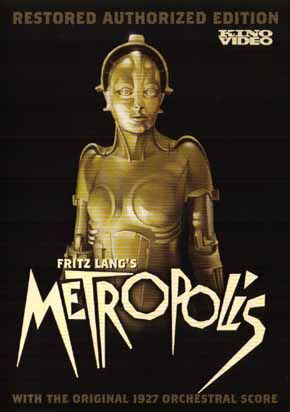
Filling In The Blanks: "Metropolis" (1927)

"Filling in the blanks" will be my attempt to fill in larger holes in my film knowledge. Some embarrasing truths may surface.


This week I dig out a movie so old it could be your grandfather, and perhaps obscure and lost enough to make your local cinema owner go "Oh, that's the city Superman lives in, right?".


"Metropolis" (1927)
Directed by Fritz Lang.
Perhaps most famously known for being heavily featured in Queen's music video for "Radio Gaga"

"There can be no understanding between the hands and the brain unless the heart acts as mediator."
- Maria

Prelude - Interlude - Furioso. Those are the three title cards that divide this film. And indeed it does bear more of an operatic feel as opposed to a cinematic one. Thus making it very difficult to get a proper frame of reference for it.

This movie is old. Really old for a film. It predates colour and it predates sound. It is even estimated that about a fourth of the original cut has been lost to time. Though in the meantime some more of it seems to have resurfaced. Nonetheless the edition I'm basing my review on here is a 119 minute cut restored in 2003. Sometimes the missing pieces help the pacing of the movie, other times it is actually vital points that seem to be missing.

Nonetheless, age and missing pieces aside, you would find this movie to be eerily familiar if you ever watched it, and yes, even if you're not a fan of Queen. Many of the shots and designs in the film echo through our counsciousness in the same way Quentin Tarantinos do the the cinephile. The difference is that while comparisons can be made to later films that almost certainly allude to this film (Star Wars, Frankenstein and both Tim Burton and Christopher Nolans versions of "Batman") the eerie feeling of familiarity comes from watching the view of the city of Metropolis itself and realizing how prophetic it way in it layout and design. A few redundancies of Sci-Fi aside, this is a late 20th century city.


As I mentioned, the movie is more operatic than cinematic. The plot revolves around a workers movement with slightly religious overtones that turns into a violent revolution once the beautiful leader Maria is replaced by a cyborg, constructed by the evil scientist Rotwang, who is seeking revenge on the city's plutocratic leader, Joh Fredersen.

All this is peppered with apocalyptic imagery, provided by the fantasy sequences in the mind of Fredersens son, Freders, who has also fallen in love with Maria. The plot itself is neither revolutionary nor really surprising to any modern viewer, perhaps it wasn't even in it's original day. But I think that has more to do with that story, like the imagery, is as if in a mythological Ur-state. An Ur-state that influences much that comes after it, giving a foudation to build upon and twist.

The films final morale (The quote by Maria above, which acts as a leitmotif throughout the film) may be either a bit to religious or a bit too socialist for your tastes. Personally I find that if one views this in the light of the latter, the movie actually loses a bit of it's operatic self-importance and becomes more of an incomplete Charles Dickens-sci-fi.

I doubt we will ever see a movie quite like "Metropolis" again. It is a visual tale, almost epic in its execution, perhaps to the point of being almost too much in love with itself. Those things have been found in many films since, but very rarely with such a pure and archetypical quality. If you ever wondered why cinema became one of the greatest art and entertainment forms, "Metropolis" provides one of the earliest answers.

And just because you didn't ask for it, Here's that Queen music video:

January 26, 2010

Avatar #1 at the Box Office


And so it came to pass, on the 26th day of the year 2010, 39 days after it's theatrical release, that "Avatar" became the highest grossing film, surpassing even "Titanic".

Though I must point out that this sounds a bit more impressive than it is. Just think about it:

Did you go see "Avatar"? Did one thing strike you about the ticket? Oh yes, it was probably at least 50% more expensive than any other movie ticket you bought.

James Cameron's "Avatar" is the box office lead by virtue of having the most EXPENSIVE tickets. Not by having sold the MOST. The original "Star Wars" sold about twice as many tickets, and that movie only ranks #30 on the list that Avatar now dominates. And that list does not even account for inflation.

One should not judge a movies quality solely by box office. If that had been the case, then up until now Titanic would have been the worlds best film, and before that it would have been "E.T.". Oh, and in case you were wondering: It would have made "Harry Potter" the best series in the history of film.

The feat is not at all unimpressive, but it sounds like more of an achievement than it probably is, all things considered. Nonetheless I think that this is more of a testament to the qualities of "Avatar" than the Golden Globe for Best Picture. Congratulations from here, James Cameron.

January 23, 2010

Jesus Christ Returns in 2011 - Will He Please His Fans?

Excatly what it says in the title. A titled "Ressurection of the Christ" is slated for release in the Easter of 2011, which seems very fitting. In case you forgot, Easter is the holiday that celebrates the crucufiction and resurrection of Jesus of Nazareth. Well, actually it is an old jewish harvest ritual, that happened to coincide with Jesus' return to Jerusalem, which subsequently got some germanic rituals (the easter bunny) mixed in there somewhere.

But noone wants to see a movie about any of that.

Rodney Brazeau of The Movie Blog (my source on this piece of news) speculates that this will be a movie of similar style and tone to Mel Gibson's "The Passion of the Christ". Which most people probably remember for the very graphic depictions of torture and the crufixion itself. A bit unfair, I think, because the movie also manages to make the characters relatively interesting, compelling and believeable. And when you're dealing with scripture as your source material, that is far from a guarantee.

"Ressurection of the Christ" will apparantly also go deeper in to this aspect, that I found to be the most interesting in Gibson's film. It will explore the political landscape of the time, and how that eventually leads into the prosecution of "The King of the Jews".

As said earlier: Religious scripture can, moreso than other litterature, be the most difficult source material. Whereas a piece of fiction (such as Twilight or Harry Potter) may have a large and very diehard fanbase that will burst into rage at the very smallest of detail changed in adaptation, this doesn't really compare to how many toes you can end up stepping on by disrespecting or "mistreating" a religious work.

Nonetheless, most will agree that figures such as Jesus Christ (and most of his deeds and actions) have been absorbed so much into the general counsciousness, that one needs a new angle on the material (or the character itself) to catch your audience, show vision and ambition, tell your story and perhaps, in the process, make the original character even more defined and appreciated.

January 21, 2010

Tim Burton's Latest Dark and Misunderstood Character is...


If you've watched more than a handful of Tim Burton’s films, chances are you've noticed a pattern. Not so much the use of gothic imagery or the fact that he more often that not lets his films be scored by Danny Elfman.

What I'm talking about is his pattern of having a protagonist (or at least a major character) who is a dark person (often with a dark exterior yet a sensitive core), wronged or misunderstood by society who in the either gains society’s respect or dies.

Just to name a few: In his take on Batman, it was... well Batman. In Batman Returns he does it again, though this time with the villain the penguin. In Edward Scissorhands it is again the titular character. In Sweeney Todd I don't even think I have to explain the example, and the argument can be made that the same thing happens in Charlie and the Chocolate Factory. Though we can discuss whether the actual protagonist is Willy Wonka or Charlie Bucket.

It remains to be seen whether he will use some incarnation of this motif again in this years "Alice in Wonderland", though it is worth noting that the promotional material seems to favour Johnny Depp's Mad Hatter (which should really be no surprise) and Depp played three of the above characters.

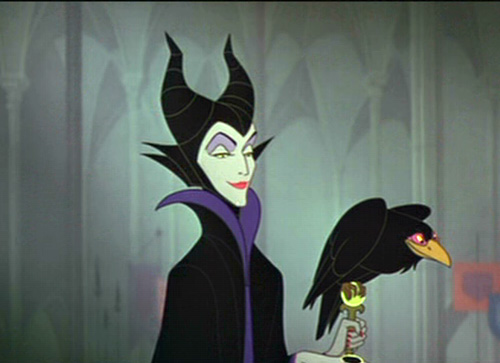
So you can imagine that I was not surprised when rumour had it that Tim Burton has his eye on another film in the Disney back catalogue, "Sleeping Beauty", and that he will allegedly use this pattern again. In essence he will tell the story from the point of view of the villain Maleficent (pictured below), the fairy wronged by not being invited to the christening of princess Aurora.


Though to be fair, this particular idea has been used before by someone other than Burton, albeit in the context of a different story. The novel and musical "Wicked" tells the story of "The Wizard of Oz" as seen by it's villain, the Wicked Witch of the West.

If this turns out to be true I am actually quite excited about the project. There is a story here that will be just up Burton's alley. And Maleficent is, in my opinion, actually one the more interesting villains in the Disney back catalogue, though I imagine that Burton will try to differentiate his take from the iconic character of the original film. I wouldn't be at all surprised if he looks back to the original Brothers Grimm fairy tale and digs some inspiration up from there.

Source: Ain't It Cool News.

January 20, 2010

Re-Viewing: "Sky Captain and the World of Tomorrow" (2004)

Hi there. When "Re-View" films, it actually means that i am RE-Viewing them. Thus giving me the opportunity to share my reflections on a film I have by then viewed many times. Some may seem better, some may seem worse. Instant hit doesn't mean classic, standing the test of time does.

"Sky Captain and the World of Tomorrow" (2004)
Director: Kevin Conran
Feautring such actors as Jude Law, Gwyneth Paltrow, Angelina Jolie, Giovanni Ribisi and Laurence Olivier back from the dead!


Now, most of you may be wondering why I pull this relatively obscure movie down from the shelf. Mostly it is due to the post I made yesterday, "Avatar Depression". Because in a sense this movie and Avatar share a lot more than Avatar does with many of the films it either ripped off or "was inspired by" (depending on how much you liked the movie).

This film is, like the more succesful "300" and "Sin City" after it, shot entirely with actors against greenscreens. I am going out on a limb here saying that this movie was the first to counsciously do so, even going so far as making it somewhat of a promotional hook.

The movie is set in a alternate circa 1939, where we as the audience are never quite sure whether or not there is a World War II going on. But that doesn't really matter because this movie is, like "Star Wars" and "Indiana Jones" before it, heavily inspired by the serial movies of the period, and thus the outlandish action (involving Max Fleischer-inspired giant robots, tons of dynamite, a diabolical Master Plot by a german doctor and a seemingly indestructible plane) follows the law of cartoon physics.

Thus, what we get is pure unadulterated old-school fun. This is in no small way helped by the excellent chemistry between Jude Law (as the titular captain) and Gwyneth Paltrow (as his reporter ex-girlfriend Polly Perkins) with Giovanni Ribisi also delivering a delicious performance in the few scenes he gets. Though, in all fairness once the actors are not playing off eachother, it becomes a bit too clear that they are literally acting against nothing. This didn't seem to scare Ribisi though, as he later went on to be in "Avatar".

Yes, the graphic work may seem somewhat dated today (even taking the retro-look into account) and may even have done so when the movie was first released. But the movie is so much more than its effects, as any movie should be. A sobering reminder to everybody:

A movie that is cutting edge when it is released will, by its very nature, not look cutting edge forever. A movie needs to be more than its effects, and "Sky Captain" is. It is unadulterated fun, sure the please the boy in everyone, and the Jude Law-adoring inner girl as well.


Oh, and it has Angelina Jolie. Though for those already drooling I must caution that she wears and eyepatch and a british accent.

January 19, 2010

Avatar Depression or "Why some people should just never be allowed inside a movie theater"


Avatar was without a doubt the big event of late 2009. If you haven't seen it already it's clearly because you never meant to.

It made sure that James Cameron can now say he directed the two highest grossing films ever (This and "Titanic"), it made half the world sit wearing some glasses that they would have laughed at on the street, and just last night it won the Golden Globe for Best Picture (Much to the dismay of everyone who cared). Though I have to admit that to win a few verbal discussion concerning its quality, I have referred to it as "Pocahontas in Space". Which is, in my defense, not excatly untrue, and not necessarily a bad thing. Of all the things an animated movie can be compared to, a Disney feature isn't excatly the worst.

However, the other day I stumbled across a news article that perhaps for the first time almost made me smack my forehead with the words "what a bunch of [censored for your convenience]".

It seems that there is appearently a entire thread on the official Avatar Forum (Don't be surprised that there is such a forum) dedicated to people suffering depression due to withdrawal from the enchanting world of Pandora (In case you weren't paying attention while watching - that's the planet the movie is set on). Apperantly some of the users of the forum have even had bordeline suicidal thoughts.

Now, just to be clear: I do not consider "Avatar" to be a bad movie. I find it to be a okay movie that enjoys great succes for being peerless in its visuals. I was however no more convinced that Pandora (or anything else in the movie) was real than I was when I watched "Final Fantasy: The Spirits Within" back in 2001.

Sure the facial expressions and such had an astounding degree of detail about them. Though it baffles me why James Cameron devoloped this technology and then chose a lead actor whos facial expression range appears somewhat limited. To me the two great CGI Characters of the 2000's will always be Gollum of "Lord of the Rings", and to a lesser degree Davy Jones of "Pirates of the Caribbean". Gollum was a far more engaging character than any in "Avatar" - and he barely even resembled a human.

However, back to the visual backdrop (as opposed to the characters) of Pandora. It is my sincere hope that this is some sort of elaborate joke. Or, if not, then at least a state of depression that is to be taken no more seriously than this horde of online attention whores who use self-descriptions such as "emo".

If neither of these two are the case, then this is merely a sad example of an obscene luxury problem. And just proves that in a world were panels exits with the purpose of helping parental guidance concerning movies, there are still people who should just never be allowed in a movie theater. And these are part of that mass.

I'm as much a supporter of the instituion of physical movie theatres as the next guy. But these people need to be given an old CRT (preferably black and white or with some other deficiency) to watch their movies on. That way all future depressions can be preemptively prevented, because conceivably "Avatar" won't be the worlds most beautiful movie forever.

Source: Politiken.dk, picture: Associated Press.

This probably constitutes my first official antagonist post. Please tell me your thoughts on the subject.