A quick post concerning the 10 most downloaded films of 2009 (according to TorrentFreak) and their Box Office gross. The list goes by most downloaded, box office placement in parenthesis.
1) Star Trek (No. 7 at the Box Office)
2) Transformers: Revenge of the Fallen (No. 2 at the B.O.)
3) Rocknrolla (Not on the Top 100)
4) The Hangover (No. 6)
5) District 9 (No. 27)
6) Twilight: New Moon (No. 4)
7) Harry Potter and the Half-Blood Prince (no. 3)
8) State of Play (no. 76)
9) X-Men Origins: Wolverine (No. 13)
10) Knowing (No. 38)
The real loser here seems to be Guy Ritchie's Rocknrolla. But this doesn't even begin to factor in things such as width of releas - I personally cen't even remember if the movie was realeased anywhere near me.
Otherwise this would seem to support the image of the typical downloader. "Star Trek", "Wolverine", "Transformers" and to a lesser degree "Knowing" fit in well with the computer-savvy teenager.
The odd man out here is Twilight, which climbs high in gross, despite high downloads. My guess is that this is because it tends to the need of a market (the tween-teenage girl) that is otherwise unattended. That is if one doesn't count Harry Potter, which I'll say is more gender neutral.
Completely absent from the top 10 is Avatar. Of course is was released as one of the last movies of the year, but the studios at least seem convinced that the 3-D technology is their weapon against piracy.
Sources: TorrentFreak, Box Office Mojo
January 28, 2010

January 27, 2010
Sam Worthington Will Suck Your Blood

Sam Worthington ("Avatar", "Terminator Salvation") has apparantly been cast to play Vlad the Impaler, the Transylvanian warlord who is perhaps better known as Vlad Dracul or Dracula these days. The movie in question is "Dracula: Year Zero", and origin story that will apparantly be based on the historical Vlad, turning him into the iconic vampire in the process.
Word on the internet has been generally negative about this, but I'm actually somewhat hopeful about this. The argument is that Worthington is more of an action lead than the sinister, slender pseudo-european type we usually see as the transylvanian vampire.
If you got the idea that I hate Worthington (perhaps in some of my earlier posts about "Avatar") I have to say that is not the case. He seems like a competent action lead, and though I didn't find him to be stellar in "Avatar", I am actually looking forward to seeing him in this years "Clash of the Titans", a remake of the old Ray Harryhausen-fueled classic.
As for him not fitting people's concept of Dracula, I can only point to another Victorian litterary character that was recently given a radically different treatment: Sherlock Holmes.
Some characters, like Holmes and Dracula, simply have roots and forms so deep and iconic that no re-imagining can overshadow them. If anything this will will be an oppurtunity to give Dracula a new treatment, and an action star might just be the right way to do this.
Plus, if this movie becomes the franchise the titles suggests that the studio is hoping for, we might actually get to see Worthington play a villain - which might just be the oppurtunity he needs to prove whether or not he has really got some acting chops.
What are your thoughts on Sam Worthington as Dracula?
Filling In The Blanks: "Metropolis" (1927)
"Filling in the blanks" will be my attempt to fill in larger holes in my film knowledge. Some embarrasing truths may surface.

This week I dig out a movie so old it could be your grandfather, and perhaps obscure and lost enough to make your local cinema owner go "Oh, that's the city Superman lives in, right?".
"Metropolis" (1927)
Directed by Fritz Lang.
Perhaps most famously known for being heavily featured in Queen's music video for "Radio Gaga"
"There can be no understanding between the hands and the brain unless the heart acts as mediator."
- Maria
Prelude - Interlude - Furioso. Those are the three title cards that divide this film. And indeed it does bear more of an operatic feel as opposed to a cinematic one. Thus making it very difficult to get a proper frame of reference for it.
This movie is old. Really old for a film. It predates colour and it predates sound. It is even estimated that about a fourth of the original cut has been lost to time. Though in the meantime some more of it seems to have resurfaced. Nonetheless the edition I'm basing my review on here is a 119 minute cut restored in 2003. Sometimes the missing pieces help the pacing of the movie, other times it is actually vital points that seem to be missing.
Nonetheless, age and missing pieces aside, you would find this movie to be eerily familiar if you ever watched it, and yes, even if you're not a fan of Queen. Many of the shots and designs in the film echo through our counsciousness in the same way Quentin Tarantinos do the the cinephile. The difference is that while comparisons can be made to later films that almost certainly allude to this film (Star Wars, Frankenstein and both Tim Burton and Christopher Nolans versions of "Batman") the eerie feeling of familiarity comes from watching the view of the city of Metropolis itself and realizing how prophetic it way in it layout and design. A few redundancies of Sci-Fi aside, this is a late 20th century city.

As I mentioned, the movie is more operatic than cinematic. The plot revolves around a workers movement with slightly religious overtones that turns into a violent revolution once the beautiful leader Maria is replaced by a cyborg, constructed by the evil scientist Rotwang, who is seeking revenge on the city's plutocratic leader, Joh Fredersen.
All this is peppered with apocalyptic imagery, provided by the fantasy sequences in the mind of Fredersens son, Freders, who has also fallen in love with Maria. The plot itself is neither revolutionary nor really surprising to any modern viewer, perhaps it wasn't even in it's original day. But I think that has more to do with that story, like the imagery, is as if in a mythological Ur-state. An Ur-state that influences much that comes after it, giving a foudation to build upon and twist.
The films final morale (The quote by Maria above, which acts as a leitmotif throughout the film) may be either a bit to religious or a bit too socialist for your tastes. Personally I find that if one views this in the light of the latter, the movie actually loses a bit of it's operatic self-importance and becomes more of an incomplete Charles Dickens-sci-fi.
I doubt we will ever see a movie quite like "Metropolis" again. It is a visual tale, almost epic in its execution, perhaps to the point of being almost too much in love with itself. Those things have been found in many films since, but very rarely with such a pure and archetypical quality. If you ever wondered why cinema became one of the greatest art and entertainment forms, "Metropolis" provides one of the earliest answers.
And just because you didn't ask for it, Here's that Queen music video:
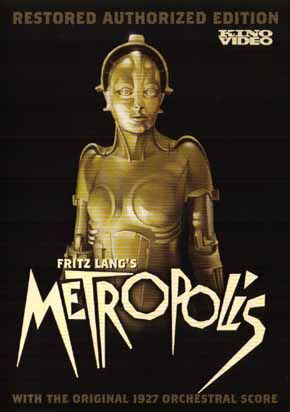
This week I dig out a movie so old it could be your grandfather, and perhaps obscure and lost enough to make your local cinema owner go "Oh, that's the city Superman lives in, right?".
"Metropolis" (1927)
Directed by Fritz Lang.
Perhaps most famously known for being heavily featured in Queen's music video for "Radio Gaga"
"There can be no understanding between the hands and the brain unless the heart acts as mediator."
- Maria
Prelude - Interlude - Furioso. Those are the three title cards that divide this film. And indeed it does bear more of an operatic feel as opposed to a cinematic one. Thus making it very difficult to get a proper frame of reference for it.
This movie is old. Really old for a film. It predates colour and it predates sound. It is even estimated that about a fourth of the original cut has been lost to time. Though in the meantime some more of it seems to have resurfaced. Nonetheless the edition I'm basing my review on here is a 119 minute cut restored in 2003. Sometimes the missing pieces help the pacing of the movie, other times it is actually vital points that seem to be missing.
Nonetheless, age and missing pieces aside, you would find this movie to be eerily familiar if you ever watched it, and yes, even if you're not a fan of Queen. Many of the shots and designs in the film echo through our counsciousness in the same way Quentin Tarantinos do the the cinephile. The difference is that while comparisons can be made to later films that almost certainly allude to this film (Star Wars, Frankenstein and both Tim Burton and Christopher Nolans versions of "Batman") the eerie feeling of familiarity comes from watching the view of the city of Metropolis itself and realizing how prophetic it way in it layout and design. A few redundancies of Sci-Fi aside, this is a late 20th century city.

As I mentioned, the movie is more operatic than cinematic. The plot revolves around a workers movement with slightly religious overtones that turns into a violent revolution once the beautiful leader Maria is replaced by a cyborg, constructed by the evil scientist Rotwang, who is seeking revenge on the city's plutocratic leader, Joh Fredersen.
All this is peppered with apocalyptic imagery, provided by the fantasy sequences in the mind of Fredersens son, Freders, who has also fallen in love with Maria. The plot itself is neither revolutionary nor really surprising to any modern viewer, perhaps it wasn't even in it's original day. But I think that has more to do with that story, like the imagery, is as if in a mythological Ur-state. An Ur-state that influences much that comes after it, giving a foudation to build upon and twist.
The films final morale (The quote by Maria above, which acts as a leitmotif throughout the film) may be either a bit to religious or a bit too socialist for your tastes. Personally I find that if one views this in the light of the latter, the movie actually loses a bit of it's operatic self-importance and becomes more of an incomplete Charles Dickens-sci-fi.
I doubt we will ever see a movie quite like "Metropolis" again. It is a visual tale, almost epic in its execution, perhaps to the point of being almost too much in love with itself. Those things have been found in many films since, but very rarely with such a pure and archetypical quality. If you ever wondered why cinema became one of the greatest art and entertainment forms, "Metropolis" provides one of the earliest answers.
And just because you didn't ask for it, Here's that Queen music video:
January 26, 2010
Avatar #1 at the Box Office

And so it came to pass, on the 26th day of the year 2010, 39 days after it's theatrical release, that "Avatar" became the highest grossing film, surpassing even "Titanic".
Though I must point out that this sounds a bit more impressive than it is. Just think about it:
Did you go see "Avatar"? Did one thing strike you about the ticket? Oh yes, it was probably at least 50% more expensive than any other movie ticket you bought.
James Cameron's "Avatar" is the box office lead by virtue of having the most EXPENSIVE tickets. Not by having sold the MOST. The original "Star Wars" sold about twice as many tickets, and that movie only ranks #30 on the list that Avatar now dominates. And that list does not even account for inflation.
One should not judge a movies quality solely by box office. If that had been the case, then up until now Titanic would have been the worlds best film, and before that it would have been "E.T.". Oh, and in case you were wondering: It would have made "Harry Potter" the best series in the history of film.
The feat is not at all unimpressive, but it sounds like more of an achievement than it probably is, all things considered. Nonetheless I think that this is more of a testament to the qualities of "Avatar" than the Golden Globe for Best Picture. Congratulations from here, James Cameron.
January 23, 2010
Jesus Christ Returns in 2011 - Will He Please His Fans?
Excatly what it says in the title. A titled "Ressurection of the Christ" is slated for release in the Easter of 2011, which seems very fitting. In case you forgot, Easter is the holiday that celebrates the crucufiction and resurrection of Jesus of Nazareth. Well, actually it is an old jewish harvest ritual, that happened to coincide with Jesus' return to Jerusalem, which subsequently got some germanic rituals (the easter bunny) mixed in there somewhere.
But noone wants to see a movie about any of that.
Rodney Brazeau of The Movie Blog (my source on this piece of news) speculates that this will be a movie of similar style and tone to Mel Gibson's "The Passion of the Christ". Which most people probably remember for the very graphic depictions of torture and the crufixion itself. A bit unfair, I think, because the movie also manages to make the characters relatively interesting, compelling and believeable. And when you're dealing with scripture as your source material, that is far from a guarantee.
"Ressurection of the Christ" will apparantly also go deeper in to this aspect, that I found to be the most interesting in Gibson's film. It will explore the political landscape of the time, and how that eventually leads into the prosecution of "The King of the Jews".
As said earlier: Religious scripture can, moreso than other litterature, be the most difficult source material. Whereas a piece of fiction (such as Twilight or Harry Potter) may have a large and very diehard fanbase that will burst into rage at the very smallest of detail changed in adaptation, this doesn't really compare to how many toes you can end up stepping on by disrespecting or "mistreating" a religious work.
Nonetheless, most will agree that figures such as Jesus Christ (and most of his deeds and actions) have been absorbed so much into the general counsciousness, that one needs a new angle on the material (or the character itself) to catch your audience, show vision and ambition, tell your story and perhaps, in the process, make the original character even more defined and appreciated.
But noone wants to see a movie about any of that.
Rodney Brazeau of The Movie Blog (my source on this piece of news) speculates that this will be a movie of similar style and tone to Mel Gibson's "The Passion of the Christ". Which most people probably remember for the very graphic depictions of torture and the crufixion itself. A bit unfair, I think, because the movie also manages to make the characters relatively interesting, compelling and believeable. And when you're dealing with scripture as your source material, that is far from a guarantee.
"Ressurection of the Christ" will apparantly also go deeper in to this aspect, that I found to be the most interesting in Gibson's film. It will explore the political landscape of the time, and how that eventually leads into the prosecution of "The King of the Jews".
As said earlier: Religious scripture can, moreso than other litterature, be the most difficult source material. Whereas a piece of fiction (such as Twilight or Harry Potter) may have a large and very diehard fanbase that will burst into rage at the very smallest of detail changed in adaptation, this doesn't really compare to how many toes you can end up stepping on by disrespecting or "mistreating" a religious work.
Nonetheless, most will agree that figures such as Jesus Christ (and most of his deeds and actions) have been absorbed so much into the general counsciousness, that one needs a new angle on the material (or the character itself) to catch your audience, show vision and ambition, tell your story and perhaps, in the process, make the original character even more defined and appreciated.
January 21, 2010
Tim Burton's Latest Dark and Misunderstood Character is...

If you've watched more than a handful of Tim Burton’s films, chances are you've noticed a pattern. Not so much the use of gothic imagery or the fact that he more often that not lets his films be scored by Danny Elfman.
What I'm talking about is his pattern of having a protagonist (or at least a major character) who is a dark person (often with a dark exterior yet a sensitive core), wronged or misunderstood by society who in the either gains society’s respect or dies.
Just to name a few: In his take on Batman, it was... well Batman. In Batman Returns he does it again, though this time with the villain the penguin. In Edward Scissorhands it is again the titular character. In Sweeney Todd I don't even think I have to explain the example, and the argument can be made that the same thing happens in Charlie and the Chocolate Factory. Though we can discuss whether the actual protagonist is Willy Wonka or Charlie Bucket.
It remains to be seen whether he will use some incarnation of this motif again in this years "Alice in Wonderland", though it is worth noting that the promotional material seems to favour Johnny Depp's Mad Hatter (which should really be no surprise) and Depp played three of the above characters.
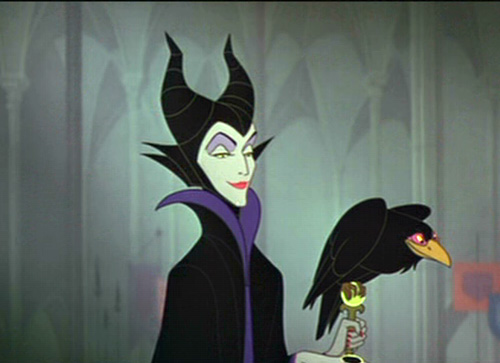
So you can imagine that I was not surprised when rumour had it that Tim Burton has his eye on another film in the Disney back catalogue, "Sleeping Beauty", and that he will allegedly use this pattern again. In essence he will tell the story from the point of view of the villain Maleficent (pictured below), the fairy wronged by not being invited to the christening of princess Aurora.
Though to be fair, this particular idea has been used before by someone other than Burton, albeit in the context of a different story. The novel and musical "Wicked" tells the story of "The Wizard of Oz" as seen by it's villain, the Wicked Witch of the West.
If this turns out to be true I am actually quite excited about the project. There is a story here that will be just up Burton's alley. And Maleficent is, in my opinion, actually one the more interesting villains in the Disney back catalogue, though I imagine that Burton will try to differentiate his take from the iconic character of the original film. I wouldn't be at all surprised if he looks back to the original Brothers Grimm fairy tale and digs some inspiration up from there.
Source: Ain't It Cool News.
January 20, 2010
Re-Viewing: "Sky Captain and the World of Tomorrow" (2004)
Hi there. When "Re-View" films, it actually means that i am RE-Viewing them. Thus giving me the opportunity to share my reflections on a film I have by then viewed many times. Some may seem better, some may seem worse. Instant hit doesn't mean classic, standing the test of time does.
"Sky Captain and the World of Tomorrow" (2004)
Director: Kevin Conran
Feautring such actors as Jude Law, Gwyneth Paltrow, Angelina Jolie, Giovanni Ribisi and Laurence Olivier back from the dead!

Now, most of you may be wondering why I pull this relatively obscure movie down from the shelf. Mostly it is due to the post I made yesterday, "Avatar Depression". Because in a sense this movie and Avatar share a lot more than Avatar does with many of the films it either ripped off or "was inspired by" (depending on how much you liked the movie).
This film is, like the more succesful "300" and "Sin City" after it, shot entirely with actors against greenscreens. I am going out on a limb here saying that this movie was the first to counsciously do so, even going so far as making it somewhat of a promotional hook.
The movie is set in a alternate circa 1939, where we as the audience are never quite sure whether or not there is a World War II going on. But that doesn't really matter because this movie is, like "Star Wars" and "Indiana Jones" before it, heavily inspired by the serial movies of the period, and thus the outlandish action (involving Max Fleischer-inspired giant robots, tons of dynamite, a diabolical Master Plot by a german doctor and a seemingly indestructible plane) follows the law of cartoon physics.
Thus, what we get is pure unadulterated old-school fun. This is in no small way helped by the excellent chemistry between Jude Law (as the titular captain) and Gwyneth Paltrow (as his reporter ex-girlfriend Polly Perkins) with Giovanni Ribisi also delivering a delicious performance in the few scenes he gets. Though, in all fairness once the actors are not playing off eachother, it becomes a bit too clear that they are literally acting against nothing. This didn't seem to scare Ribisi though, as he later went on to be in "Avatar".
Yes, the graphic work may seem somewhat dated today (even taking the retro-look into account) and may even have done so when the movie was first released. But the movie is so much more than its effects, as any movie should be. A sobering reminder to everybody:
A movie that is cutting edge when it is released will, by its very nature, not look cutting edge forever. A movie needs to be more than its effects, and "Sky Captain" is. It is unadulterated fun, sure the please the boy in everyone, and the Jude Law-adoring inner girl as well.

Oh, and it has Angelina Jolie. Though for those already drooling I must caution that she wears and eyepatch and a british accent.
"Sky Captain and the World of Tomorrow" (2004)
Director: Kevin Conran
Feautring such actors as Jude Law, Gwyneth Paltrow, Angelina Jolie, Giovanni Ribisi and Laurence Olivier back from the dead!

Now, most of you may be wondering why I pull this relatively obscure movie down from the shelf. Mostly it is due to the post I made yesterday, "Avatar Depression". Because in a sense this movie and Avatar share a lot more than Avatar does with many of the films it either ripped off or "was inspired by" (depending on how much you liked the movie).
This film is, like the more succesful "300" and "Sin City" after it, shot entirely with actors against greenscreens. I am going out on a limb here saying that this movie was the first to counsciously do so, even going so far as making it somewhat of a promotional hook.
The movie is set in a alternate circa 1939, where we as the audience are never quite sure whether or not there is a World War II going on. But that doesn't really matter because this movie is, like "Star Wars" and "Indiana Jones" before it, heavily inspired by the serial movies of the period, and thus the outlandish action (involving Max Fleischer-inspired giant robots, tons of dynamite, a diabolical Master Plot by a german doctor and a seemingly indestructible plane) follows the law of cartoon physics.
Thus, what we get is pure unadulterated old-school fun. This is in no small way helped by the excellent chemistry between Jude Law (as the titular captain) and Gwyneth Paltrow (as his reporter ex-girlfriend Polly Perkins) with Giovanni Ribisi also delivering a delicious performance in the few scenes he gets. Though, in all fairness once the actors are not playing off eachother, it becomes a bit too clear that they are literally acting against nothing. This didn't seem to scare Ribisi though, as he later went on to be in "Avatar".
Yes, the graphic work may seem somewhat dated today (even taking the retro-look into account) and may even have done so when the movie was first released. But the movie is so much more than its effects, as any movie should be. A sobering reminder to everybody:
A movie that is cutting edge when it is released will, by its very nature, not look cutting edge forever. A movie needs to be more than its effects, and "Sky Captain" is. It is unadulterated fun, sure the please the boy in everyone, and the Jude Law-adoring inner girl as well.

Oh, and it has Angelina Jolie. Though for those already drooling I must caution that she wears and eyepatch and a british accent.
January 19, 2010
Avatar Depression or "Why some people should just never be allowed inside a movie theater"

Avatar was without a doubt the big event of late 2009. If you haven't seen it already it's clearly because you never meant to.
It made sure that James Cameron can now say he directed the two highest grossing films ever (This and "Titanic"), it made half the world sit wearing some glasses that they would have laughed at on the street, and just last night it won the Golden Globe for Best Picture (Much to the dismay of everyone who cared). Though I have to admit that to win a few verbal discussion concerning its quality, I have referred to it as "Pocahontas in Space". Which is, in my defense, not excatly untrue, and not necessarily a bad thing. Of all the things an animated movie can be compared to, a Disney feature isn't excatly the worst.
However, the other day I stumbled across a news article that perhaps for the first time almost made me smack my forehead with the words "what a bunch of [censored for your convenience]".
It seems that there is appearently a entire thread on the official Avatar Forum (Don't be surprised that there is such a forum) dedicated to people suffering depression due to withdrawal from the enchanting world of Pandora (In case you weren't paying attention while watching - that's the planet the movie is set on). Apperantly some of the users of the forum have even had bordeline suicidal thoughts.
Now, just to be clear: I do not consider "Avatar" to be a bad movie. I find it to be a okay movie that enjoys great succes for being peerless in its visuals. I was however no more convinced that Pandora (or anything else in the movie) was real than I was when I watched "Final Fantasy: The Spirits Within" back in 2001.
Sure the facial expressions and such had an astounding degree of detail about them. Though it baffles me why James Cameron devoloped this technology and then chose a lead actor whos facial expression range appears somewhat limited. To me the two great CGI Characters of the 2000's will always be Gollum of "Lord of the Rings", and to a lesser degree Davy Jones of "Pirates of the Caribbean". Gollum was a far more engaging character than any in "Avatar" - and he barely even resembled a human.
However, back to the visual backdrop (as opposed to the characters) of Pandora. It is my sincere hope that this is some sort of elaborate joke. Or, if not, then at least a state of depression that is to be taken no more seriously than this horde of online attention whores who use self-descriptions such as "emo".
If neither of these two are the case, then this is merely a sad example of an obscene luxury problem. And just proves that in a world were panels exits with the purpose of helping parental guidance concerning movies, there are still people who should just never be allowed in a movie theater. And these are part of that mass.
I'm as much a supporter of the instituion of physical movie theatres as the next guy. But these people need to be given an old CRT (preferably black and white or with some other deficiency) to watch their movies on. That way all future depressions can be preemptively prevented, because conceivably "Avatar" won't be the worlds most beautiful movie forever.
Source: Politiken.dk, picture: Associated Press.
This probably constitutes my first official antagonist post. Please tell me your thoughts on the subject.
January 17, 2010
Hitler Is Pissed - His Director Isn't

Hitler is angry that Michael Jackson is dead. Hitler is pissed that the ending of "Watchmen" has no squid. He is angry about not getting Billy Elliot tickets. He is positively furious at James Cameron about "Avatar" and he is not entirely pleased that his Xbox Live account has been canceled.
Som time ago, a subtitling meme appeared on Youtube, which involved taking a certain scene from "Downfall" (2004 - perhaps better known to Europeans as "Der Untergang") in which a furious Adolf Hitler verbally abuses his top generals, and giving them subtitles that are, midly put, extraordinarily out of context.
World War II movies are usually serious business. A parody of a movie like "Schindler's List" would in most circles probably be regarded as being in very poor taste. Even when they are less than serious, they are given a certain sort of reverence. I am one of those that believe that "Inglourious Basterds" was not excatly stunted by its World War II backdrop, even though the plot could in principle just as well have manifested itself in a a gangster epic, the gratuitous violence and the ending even suggest that Tarantino is aware of this.
However when asked the director of "Downfall", Oliver Hirschbiegel, he actually thinks the trend fits the theme of the movie very well. "Downfall" is, if anything, a movie that tries to take what is likely the most demonized men of the 20th century as try to paint them as something else than heartless monsters.
I find that I agree with Hirschbiegel. These people were as human as anyone else, and forgetting this is a grave mistake to make. Thus it is vital to, as Hirschbiegel puts it, "pull them down from their piedestals".
Source: New York Magazine
Meanwhile, if you want to take a look at how Hitler himself reacts to learning he's a joke on youtube, look no further:
January 16, 2010
Trailers - Not Just For Movies

A trailer might just be the best way to advertise a movie. Sure there is viral marketing, but that is slightly more esoteric. Then there's the option of slapping up posters everywhere, but all too often these just end up being slightly transparent Photoshop-jobs and the don't really give you a feeling of "watching" the movie.
No, there simply is no substitute for a trailer. Aside from a the odd case of a promotional clip this will be our earliest possible look at any given movie. If you haven't already heard, the trailer for "Star Wars Episode I" boosted the sales of any movie it was attached to. People would simply walk out of the theater after watching the trailer. That is how significant a trailer can be.
The music industry has a similar advantage - it's called radio. A medium that does not have the advantage of this is books. Not too many days ago, I even read a column in a major danish newspaper that claimed that the enormous focus on learning how to read is misplaced. Given that the average grown dane allegedly only reads for about a total of 15 minuts a day (and this being mostly newspapers). Thus the column claimed that the educational system should focus more on the subject of decoding sound and images, rather than plain text.
How valid I find this claim to be is not the subject of this post. What I would like to hightlight here is the fact that I have encountered a quite noticable example of the world of litterature adopting a trailer-like way of marketing itself.
Prior to the publishing of the danish edition of swedish author Lars Kepler's crime novel "Hypnotisøren" (eng: "The Hypnotist" - pictured above) all bookstores and certain supermarket chains were given "free reading samples" to distribute among their customers.
Now to be fair, the novel was already fairly hyped by pretty much any reviews you'd find, but what this offered was for the customer to go home and read the first three chapters of the book, and judgde whether or not it was worth it based on this.
In fact this is an even purer form of presentation than the trailer. Can you honestly say you've never seen a movie that made you think "They put all the good parts in the trailer"? Here you get the set-up and a handful of (albeit brief) character introductions.
If litterature really is on its way out. This might just be a step in the right direction. Though only a step. "Hypnotisøren" will, however many copies it sells, not really create awareness of a new genre. It is planted firmly in the genre of books that have the highest potential of being bestsellers anyway. This is what is with varying degrees of affection called "Airport litterature".
This is as such not a game changer for the publishing industry, in that it opens vast new markets. If that were the case, then the potential of this should stretch out into other genres as well. Time alone will tell whether the full potential of this will be tapped or if it will merely support what is already succesful.
January 14, 2010
Filling In The Blanks: "The Third Man" (1949)
"Filling in the blanks" will be my little attempt at filling in blank holes in my knowledge of film classics and must-see film. A few embarrasing thruths might surface in the process.

The Third Man (1949)
Dir: Carol Reed.
"You were born to be murdered."
- Major Calloway
Roger Ebert (and countless others) love this movie, deeming it a classic in cinema, which is what finally got me to take a look at it. If it weren't for the heaps of praise that this film has received the only real hook it would seem to have for the uninvolved is the appearance of one Orson Welles, whom the DVD Covers seems to heavily oversell. Welles is in the movie for about 3 scenes in total, only speaking in one, but these are pivotal scenes and every appereance he makes pushes the plot forward elegantly, every second he is on screen feels like a fulfilling minute.
The film is set in a Post-WWII Vienna, a city in ruins, with four uncoordinated police forces. The police are fighting an uphill battle against the black market that thrives in the city. Into the middle of all this our protagonist, Hollie Martin (Joseph Cotten) arrives, penniless, and seeking his friend Harry Lime. Unfortunately he arrives just in time for Lime's funeral, finding himself stranded in Vienna, obsessed with solving what he suspects is Harry's murder.
I'm told that the films late second act plot twist is common knowledge, and indeed I was aware of it myself before even popping the disc into my DVD player. However I'll refrain from spoiling the movie, as I see how the twist increases the viewing experience.
Not that the movie itself rests on its twist alone, such as movie like "The Sixth Sense" and to a lesser degree "Fight Club" have been accused of, far from it. It is indeed highly enjoyable even if you have been spoiled.
The acting hardly ever disappoints and the city of Vienna is a fascinating backdrop, whether it is in the bars, the ruined streets or the sewers, where the climax is set. Those sewers might conceivably be the cleanest sewers in the history of mankind, theres not even a single complaint about the smell. Maybe the citizens of Vienna were just overly anal amidst their ruined city.
The movie does however have a few dents in the paint. The exposition on the ruined Vienna is given in a slightly clumsy opening voiceover by noone in particular, and it seems slightly jarring that this narrator never appears again. That said, Casablanca, another movie counted as one of the greatest ever, is also guilty of doing this. But where Casablanca has an impersonal narrator, The Third Man clearly treis to inject him with personality, as if he were a person we would meet later, only this never happens.
Holly Martins is also a character that makes the movies litterary origins a bit too obvious, being a cowboy novel writer, though this has a quite excellent and light-hearted payoff in an otherwise slightly dark movie, as he finds himself doing an lecture in front of a room full of unimpressed high-brow litterates.
Is this movie really worth all the praise? Much of it is certainly well-deserved, the movie is an exciting watch even today. Nevermind all the talk of "best ever" - the movie is an old-fashioned good watch, and honestly that was all I really cared about.

The Third Man (1949)
Dir: Carol Reed.
"You were born to be murdered."
- Major Calloway
Roger Ebert (and countless others) love this movie, deeming it a classic in cinema, which is what finally got me to take a look at it. If it weren't for the heaps of praise that this film has received the only real hook it would seem to have for the uninvolved is the appearance of one Orson Welles, whom the DVD Covers seems to heavily oversell. Welles is in the movie for about 3 scenes in total, only speaking in one, but these are pivotal scenes and every appereance he makes pushes the plot forward elegantly, every second he is on screen feels like a fulfilling minute.
The film is set in a Post-WWII Vienna, a city in ruins, with four uncoordinated police forces. The police are fighting an uphill battle against the black market that thrives in the city. Into the middle of all this our protagonist, Hollie Martin (Joseph Cotten) arrives, penniless, and seeking his friend Harry Lime. Unfortunately he arrives just in time for Lime's funeral, finding himself stranded in Vienna, obsessed with solving what he suspects is Harry's murder.
I'm told that the films late second act plot twist is common knowledge, and indeed I was aware of it myself before even popping the disc into my DVD player. However I'll refrain from spoiling the movie, as I see how the twist increases the viewing experience.
Not that the movie itself rests on its twist alone, such as movie like "The Sixth Sense" and to a lesser degree "Fight Club" have been accused of, far from it. It is indeed highly enjoyable even if you have been spoiled.
The acting hardly ever disappoints and the city of Vienna is a fascinating backdrop, whether it is in the bars, the ruined streets or the sewers, where the climax is set. Those sewers might conceivably be the cleanest sewers in the history of mankind, theres not even a single complaint about the smell. Maybe the citizens of Vienna were just overly anal amidst their ruined city.
The movie does however have a few dents in the paint. The exposition on the ruined Vienna is given in a slightly clumsy opening voiceover by noone in particular, and it seems slightly jarring that this narrator never appears again. That said, Casablanca, another movie counted as one of the greatest ever, is also guilty of doing this. But where Casablanca has an impersonal narrator, The Third Man clearly treis to inject him with personality, as if he were a person we would meet later, only this never happens.
Holly Martins is also a character that makes the movies litterary origins a bit too obvious, being a cowboy novel writer, though this has a quite excellent and light-hearted payoff in an otherwise slightly dark movie, as he finds himself doing an lecture in front of a room full of unimpressed high-brow litterates.
Is this movie really worth all the praise? Much of it is certainly well-deserved, the movie is an exciting watch even today. Nevermind all the talk of "best ever" - the movie is an old-fashioned good watch, and honestly that was all I really cared about.
Hello, Welcome and Please Do Come Inside
A few helpful and helpless remarks on this blog:
First of all thank you for finding your way here and sparing me a little of your time. It is greatly aprreciated.
This blog is, as the title suggest, primarily about film, but other subjects might just creep in like thieves in the night. However these will more often than not be linked with film, so have fear not - we won't stray to far.
What this Blog isn't:
- I'm not a professional film critic nor a journalist by profession or education. I'm just a person with a passion for film, and a will to express it. And that's as good a starting point as any-
- This blog isn't your source for the latest film reviews. Oh sure, there will be those, but they will likely be far to late for this to be your primary go-to place for fresh reviews.
What this Blog is:
- This blog is a place for people who want to discuss film, and to view film in a different way.
- This blog is where you will hopefully find an opinion that differs from those of most other movie blogs.
- A place where we look at what effect film has in the world. And how film relates to everything else (hence the title)
- As such I'll also try to take a look at the act of film critism in itself.
- In short this blog is the water cooler at the office. The champagne cooler at the party and the barstool where a vista of the world is taken.
...And another thing:
- There will be no stars, hearts or any other numerical system of rating (more on this in a later post)
Hoping you enjoy the blog.
- Christoffer Bagger
First of all thank you for finding your way here and sparing me a little of your time. It is greatly aprreciated.
This blog is, as the title suggest, primarily about film, but other subjects might just creep in like thieves in the night. However these will more often than not be linked with film, so have fear not - we won't stray to far.
What this Blog isn't:
- I'm not a professional film critic nor a journalist by profession or education. I'm just a person with a passion for film, and a will to express it. And that's as good a starting point as any-
- This blog isn't your source for the latest film reviews. Oh sure, there will be those, but they will likely be far to late for this to be your primary go-to place for fresh reviews.
What this Blog is:
- This blog is a place for people who want to discuss film, and to view film in a different way.
- This blog is where you will hopefully find an opinion that differs from those of most other movie blogs.
- A place where we look at what effect film has in the world. And how film relates to everything else (hence the title)
- As such I'll also try to take a look at the act of film critism in itself.
- In short this blog is the water cooler at the office. The champagne cooler at the party and the barstool where a vista of the world is taken.
...And another thing:
- There will be no stars, hearts or any other numerical system of rating (more on this in a later post)
Hoping you enjoy the blog.
- Christoffer Bagger
Subscribe to:
Comments (Atom)
